

Beyond the 90 Minutes: Aligning Institutional Scale With Club-Led Innovation
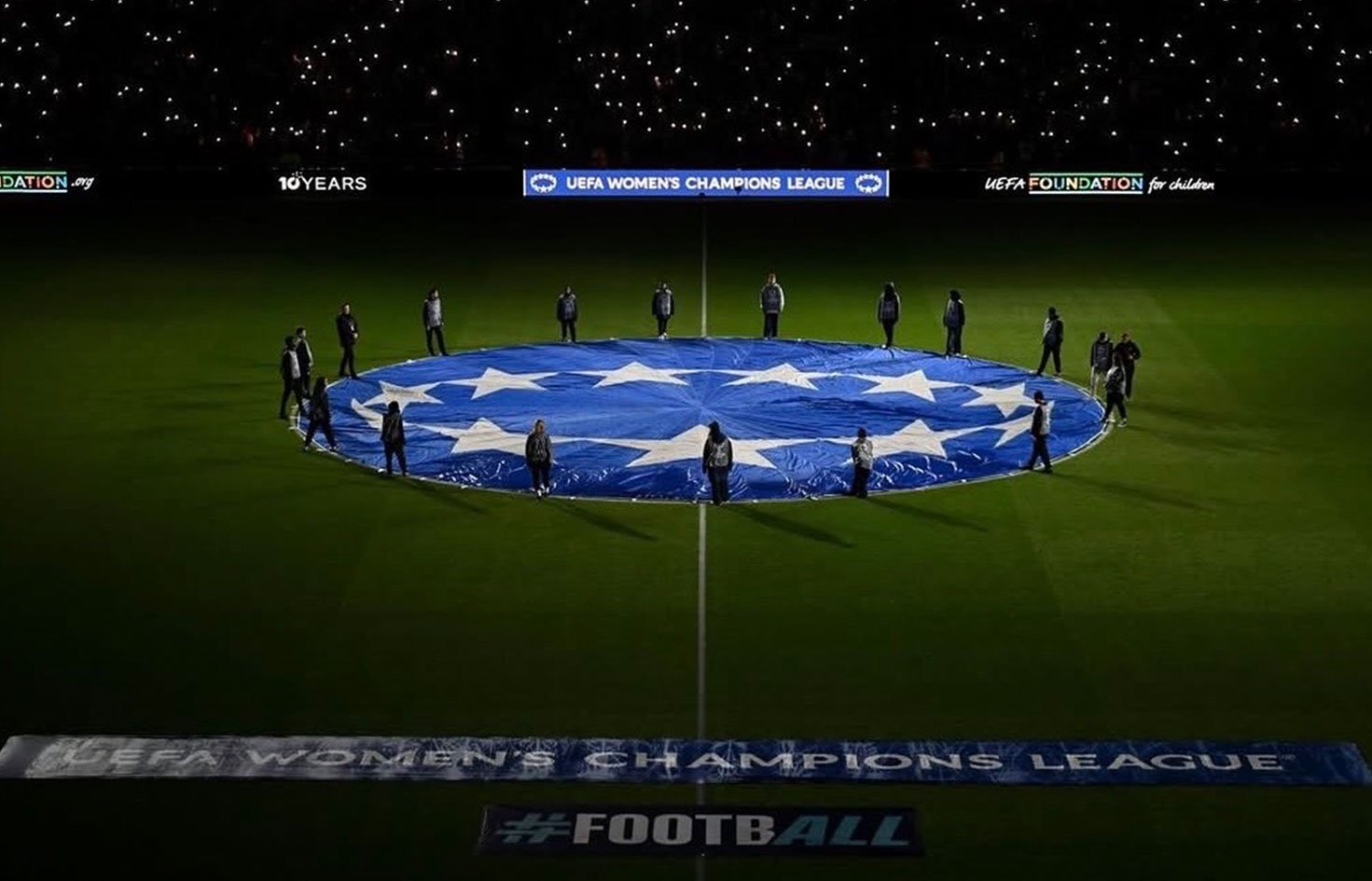
In an era of fragmented consumption and digital-first engagement, the success of European football extends beyond ninety minutes. The strategic “North Star” is the integration of institutional stability and club-led innovation; creating a unified system where elite competition anchors global attention, while continuous, data-driven fan relationships sustain value year-round.
European football has navigated several cycles of adjustment in recent years. While external narratives often focus on friction and divergence, the reality is more nuanced. We are witnessing an expansion of the system.
For decades, the model of centralised competitions, collective commercialisation, and long-term rights cycles has provided the industry with unmatched scale and consistency. This remains the essential foundation, the bedrock of competitive relevance and global reach. At the same time, the environment surrounding this model is becoming broader and more layered, shaped by the entrance of sophisticated capital and a fundamental shift in how fans consume value.
New brand reality
Clubs have grown beyond participation; they are global media entities.They operate with capabilities that were non-existent a decade ago, managing fragmented fan bases, producing high-speed content, and nurturing digital communities well beyond the match cycle. This evolution is not in contrast to the existing model. It extends it.
The dynamic is visible in the scaling of women’s football. A key driver of a global women’s elite sports market projected to exceed $3 billion in the coming years. Within football, this growth reflects a broader shift, as women’s teams grow to operate as independent, high-value business units within a more professionalised global ecosystem.
Moving from event-based to ecosystem-based value
The system is moving beyond a structure defined solely by moments: the match, the final, the trophy lift, towards a more complex model where value is created through continuity between those events. In this landscape, distribution is not just a delivery mechanism; it becomes the frontline of relationship management.
The next phase of value creation will be shaped by three interdependent dynamics:
Distribution as strategy, not utility: direct-to-fan capabilities are now a point of differentiation. The question is not whether value sits with centralised or direct distribution, but how these layers are designed to work together - ensuring reach, accessibility, and coherence across markets.
The content gap: competitions define the peak intensity of the calendar. Yet long-term value is increasingly captured in the "spaces in between", through continuous digital interaction, storytelling, and community-building.
A unified commercial architecture: the silos between media rights, sponsorship, and data are dissolving. Growth now sits at their intersection, where these assets are designed as a connected system rather than managed independently.
In an evolving complex ecosystem, the role of institutional frameworks and commercial structures such as UC3 becomes more critical, not less. Their function extends beyond organisation; it is about maintaining alignment across stakeholders with different capabilities and incentives. The relationship between governing bodies and clubs reflects a coordination of expertise required to sustain long-term growth.
The necessity of market coherence
As the system expands, the industry faces a new imperative: maintaining market coherence. In an era of multi-layered distribution, the risk goes beyond the competition, towards complexity that dilutes the product.
Expertise in the next cycle will be defined by the ability to manage that complexity; ensuring that as clubs innovate and platforms diversify, the core commercial proposition remains clear, stable, and compelling for global partners. Value is not created through innovation alone, but through a disciplined framework where each new layer reinforces the integrity of the whole.
Outlook: operating at two speeds
Looking ahead, success will be defined by the ability to operate across two speeds: the peak intensity of elite competition and the persistent engagement of a digital ecosystem.
A real-time illustration of this dynamic can be seen around major finals, where the match itself remains the focal point, while surrounding activations, content, and digital engagement extend the experience far beyond the ninety minutes.
European football has always evolved through phases of refinement. The current trajectory suggests that the game’s institutional foundations and its commercial innovations are not in competition; they are positioned to reinforce one another. By integrating these layers, the system sustains its relevance for the next generation; ensuring that the world’s game continues to operate at global scale, with local meaning.